































The Decision-Centric Supply Chain: Why AI Should Optimize Decisions, Not Dashboards

Part I: Foundations · Decision Intelligence for Manufacturing
Manufacturing leaders have spent years improving visibility.
That effort was necessary. Nobody wants to run a modern plant blind. But there is a quiet difference between seeing a problem and being able to do something useful about it. Anyone who has sat in a plant review or planning meeting knows the feeling: the information is on the table, the right people are in the room, and yet the decision keeps moving from one meeting to the next.
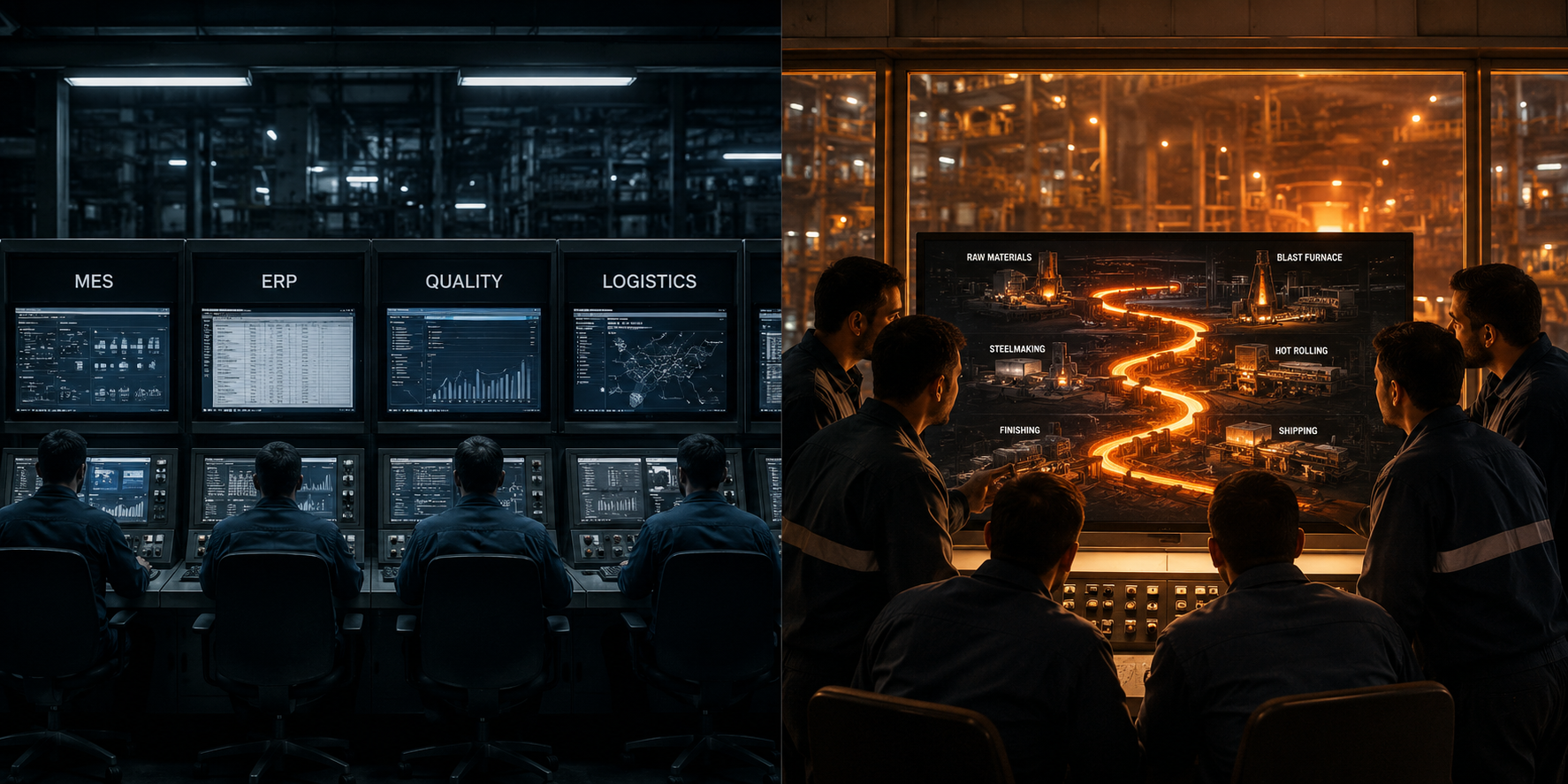
They have invested in ERP upgrades, MES deployments, planning systems, control towers, data lakes, digital twins, and increasingly sophisticated dashboards. The enterprise can now see more of its supply chain than ever before.
And yet, when something changes on the shop floor, the response can still take forty minutes… or four hours.
That is the paradox of modern manufacturing: more information does not automatically produce better decisions. Sometimes it produces a better view of the delay.
The next generation of industrial AI should therefore be organized around a different object of value. Not the dashboard. Not the model. The decision.
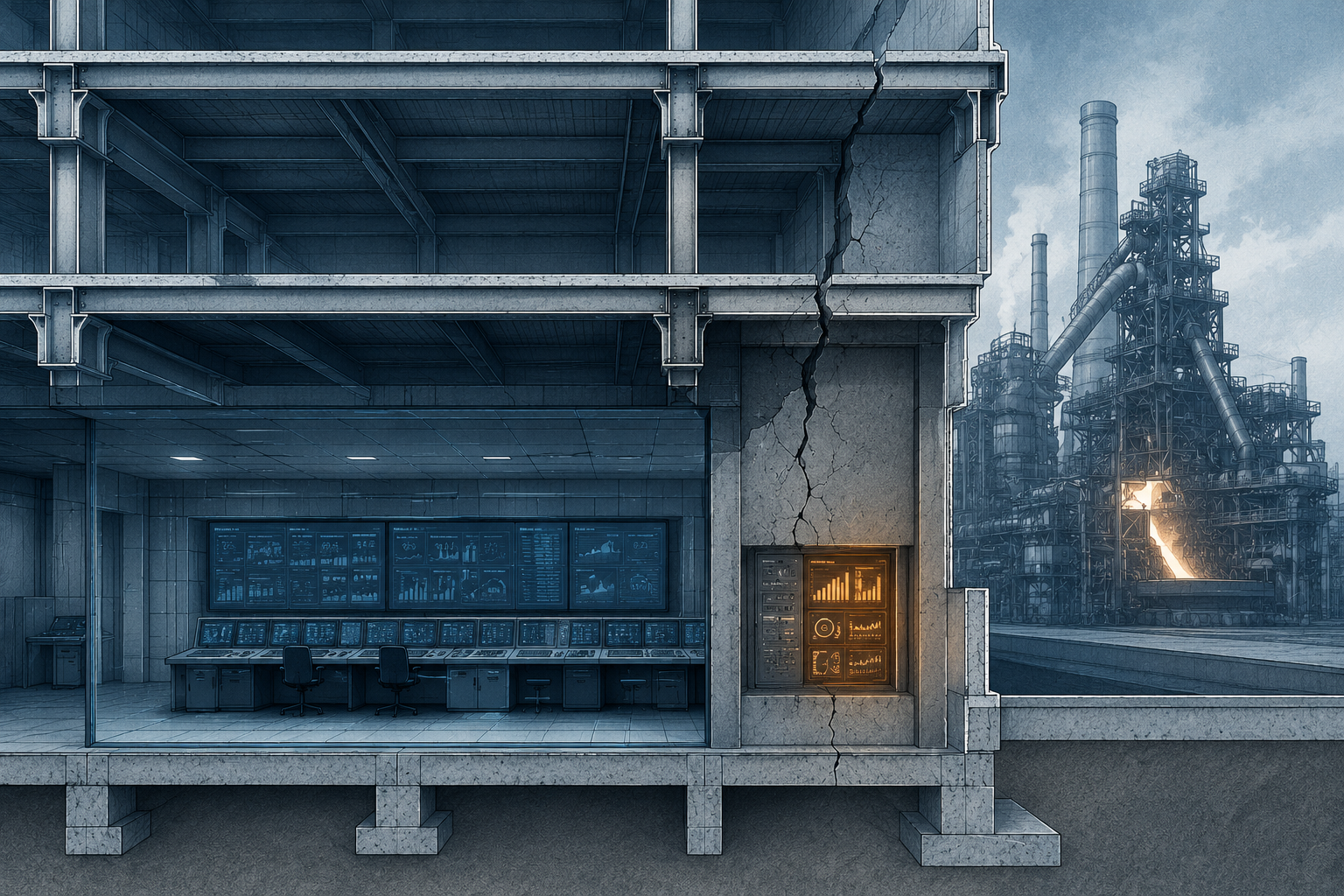
This is not an argument against dashboards or data platforms. It is an argument for putting them in their proper place. They are instruments in an operating system. They are not the operating system itself.
The forty-minute problem
Consider a composite example from an integrated steel manufacturer.
It is the kind of situation that rarely appears in a glossy transformation presentation. There is no dramatic system failure and no spectacular red alert. Instead, a small uncertainty begins to move through the organization. The people closest to the work notice it first, while the formal systems are still reporting normality.

A quality signal appears during hot rolling. The signal is not yet a catastrophic defect. It is a change in process behaviour: a temperature pattern, a surface indication, or a deviation in gauge. The mill continues to run while the signal is checked.
The shift team records the event. Quality reviews it. Planning checks which orders are affected. Logistics checks whether an alternative coil or dispatch sequence is possible. A manager asks for a consolidated view. Someone opens a dashboard. Someone else exports a spreadsheet.
Forty minutes later, the organization has agreed that a decision is required.
Nobody in this story is careless. The shift team is doing its job. Quality is protecting the customer. Planning is trying not to destabilize the schedule. Logistics is checking real capacity rather than making a promise it cannot keep. The delay is created by the shape of the work itself: each person has part of the picture, and no one owns the complete decision loop.
But the decision window has changed. The next coil has already entered the line. A downstream slot is no longer available. The customer promise has less flexibility. The only remaining options are now more expensive.
The problem was not that the plant lacked data. The problem was that the organization could not convert a changing signal into a shared, authorized action quickly enough.
This is decision latency: the time between a meaningful change in the operating environment and a coordinated response.
It is one of the least measured forms of waste in industrial operations.
We measure machine downtime, waiting time, changeover time, inventory turns, truck utilisation, and schedule adherence. We should also measure the time spent waiting for context, waiting for alignment, waiting for authorization, and waiting for an action to reach the person or system that can carry it out.
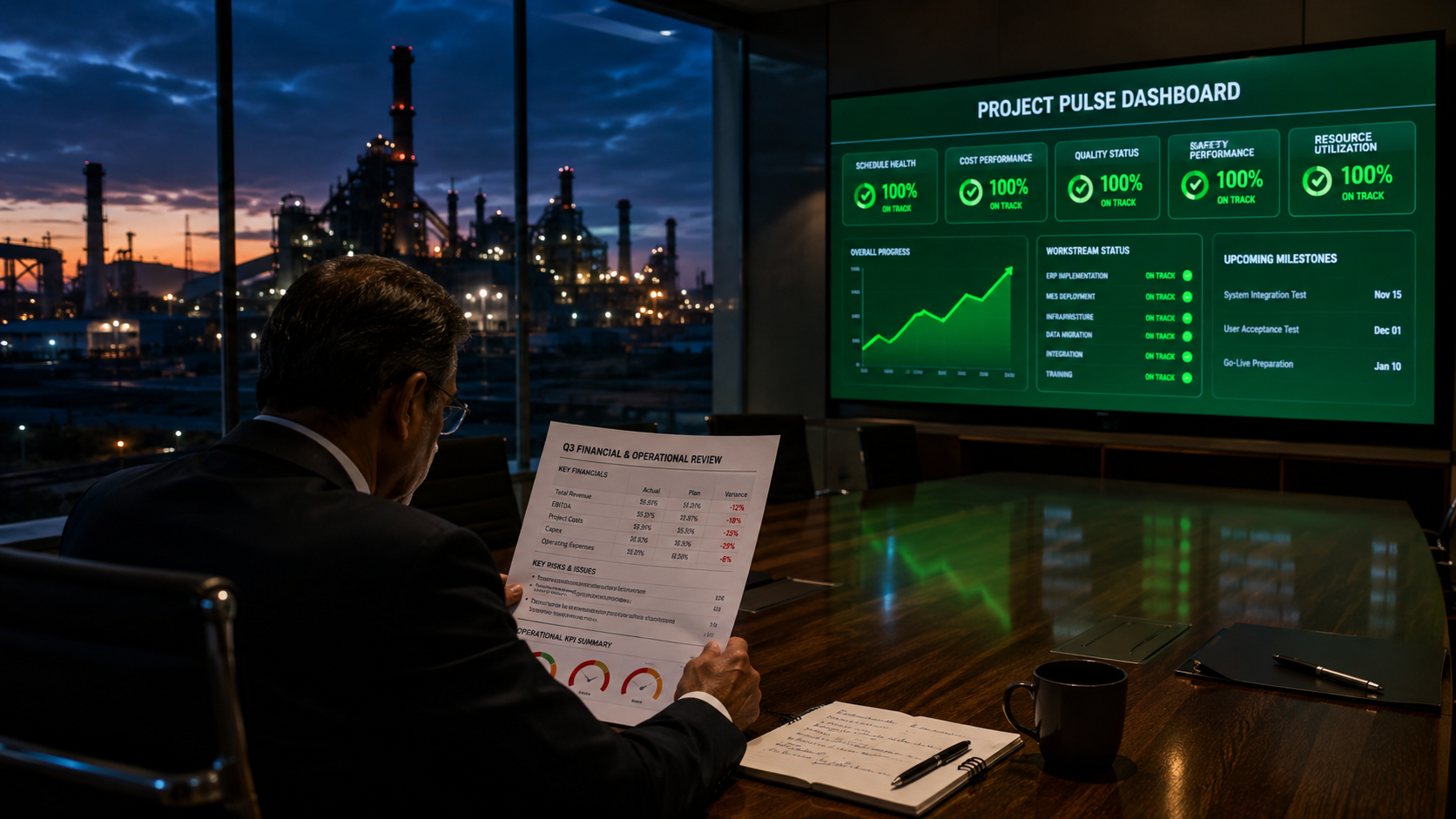
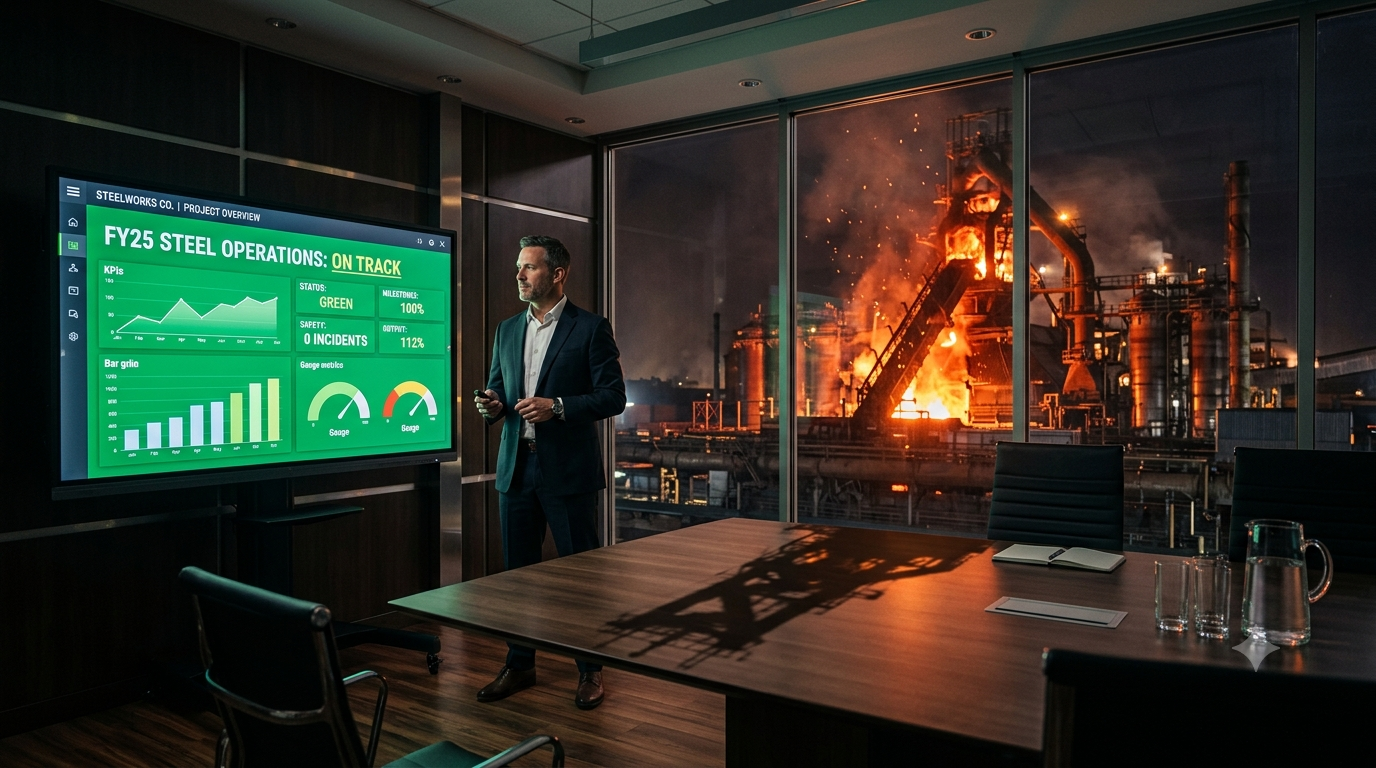
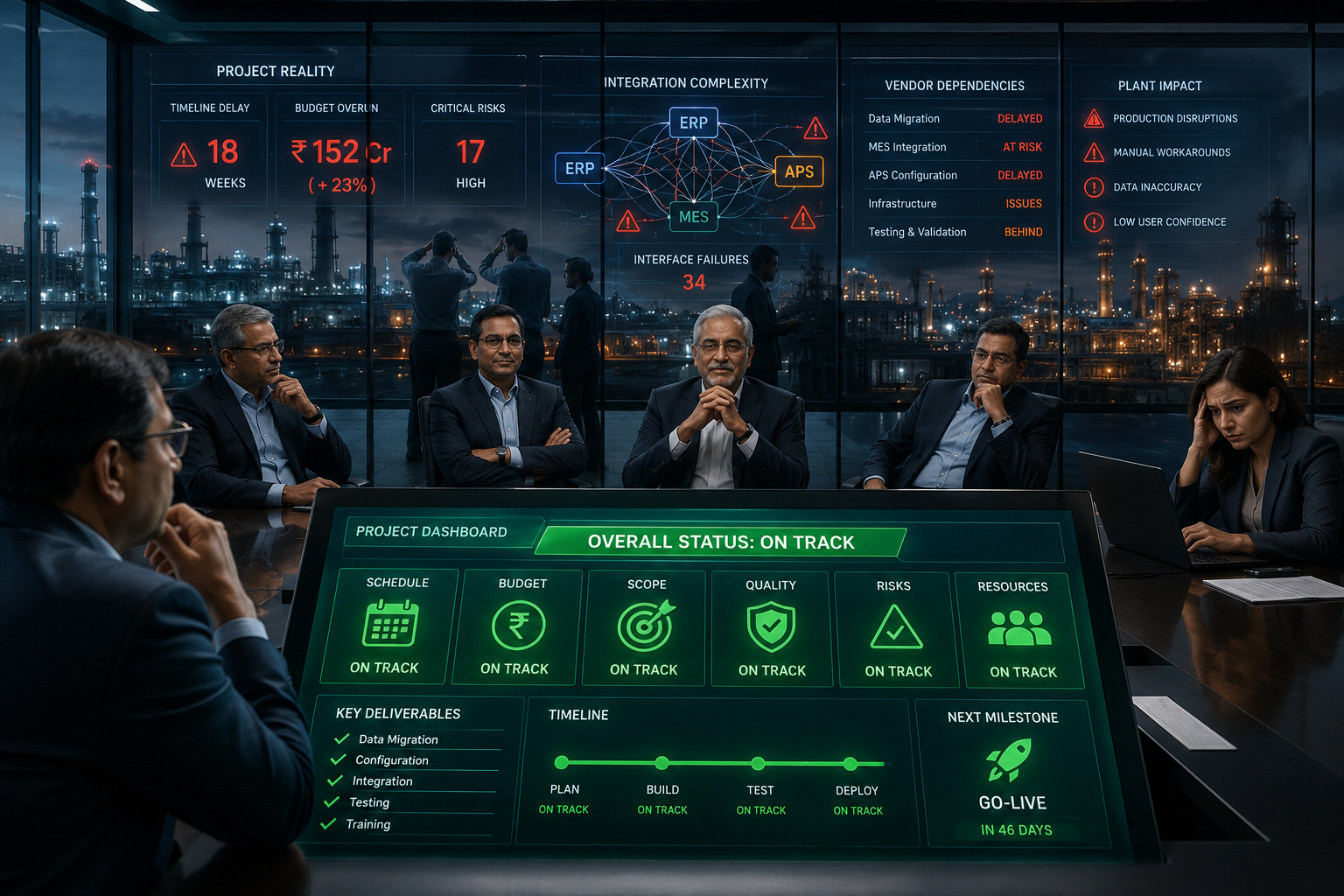
A green dashboard can hide a red decision
Dashboards are useful. They create shared visibility, expose trends, and help leaders monitor performance. The problem begins when visibility is mistaken for control.
A dashboard can tell us that inventory is within tolerance, production is on plan, and customer service is green. It may not tell us that the only feasible recovery action must be taken in the next twelve minutes.

The colour is not false. It is simply incomplete.
This is why experienced planners sometimes distrust a dashboard that senior leaders love. It may be correct at the level at which it was designed, while being unhelpful at the level at which the decision must be made. A planner needs to know which order is about to become unrecoverable, what can still be protected, and whether they are allowed to change the sequence.
Most dashboards answer questions such as:
- What happened?
- What is happening?
- Which measure is outside its threshold?
Operational decision systems must answer different questions:
- What changed that matters?
- Which decisions are now due?
- What options remain feasible?
- What constraints or promises will each option affect?
- Who has the authority to act?
- What happened after the decision?
The distinction is important. A metric describes a state. A decision changes a state.
Visibility is not agency.
The sentence is deliberately simple. It is also a useful test for every AI investment: after the signal appears, does the system help someone choose and execute a better action, or does it merely make the situation easier to observe?
The decision is the unit of value
Every manufacturing supply chain contains a recurring portfolio of decisions. Some are made hourly, some daily, and some only when the system is under stress.
Examples include:
- Which customer order should receive scarce capacity?
- Should a production sequence be changed to protect a delivery promise?
- Should a batch be released, held, reworked, or diverted?
- Should a maintenance intervention happen now or during the next planned window?
- Should a shipment be expedited at a premium cost?
- Should material be substituted, and which quality or contractual constraints apply?
- Should a project change be accepted, deferred, or escalated?
These are not merely reporting events. They are points where the enterprise spends money, consumes flexibility, accepts risk, or protects trust.
An AI strategy that begins with “Where can we use a large language model?” is starting at the wrong altitude. A better starting point is:
Which recurring decision has high frequency, meaningful consequence, visible constraints, and enough feedback to improve?
That question leads to a decision portfolio rather than a technology shopping list.
It gives business and technology teams a common language. The operations leader describes the consequence, the analyst the decision contract, the architect the information and authority flows, and the data scientist where prediction helps. Everyone works on the same object.
There is another benefit: it makes disappointment easier to diagnose. If a new AI capability does not improve the result, the team can ask whether the problem was late detection, missing context, poor alternatives, unclear authority, weak execution, or absent feedback. Without that decomposition, every failure gets labelled “the model was not accurate enough,” and the organization learns very little.
A fresh lens: protect optionality
Supply-chain professionals often speak about material flow, capacity, inventory, and cost. Those measures matter, but they do not fully describe what is being consumed as time passes. A disruption also consumes optionality: the number of reasonable choices still available to the organization.
At 8:00 a.m., a late coil may have several possible homes. It might be reassigned, held for inspection, moved to another sequence, matched with another order, or shipped through an alternative route. At 10:00 a.m., some of those choices may have disappeared. At noon, the organization may still be able to act, but only by paying a premium or disappointing someone.
This suggests a useful way to evaluate an AI system. Do not ask only whether it predicts the disruption correctly. Ask whether it helps preserve good choices for longer.
Three questions make the idea practical:
- How early does the system identify a decision that may be required?
- How many feasible choices can it explain at that moment?
- What is the cost and consequence of each remaining choice?
An early warning that does not change the available choices is interesting. An early warning that gives a planner time to protect a customer, stabilize a sequence, or arrange a credible alternative is operationally valuable.
This is also why speed alone is not enough. A rushed decision can preserve time while destroying trust, quality, margin, or safety. The aim is not to make every decision instantaneous. It is to give the right person enough time and context to make a sound decision before the situation becomes unnecessarily expensive.
The Manufacturing Decision Stack
To make a decision product useful, it helps to separate the layers that are often collapsed into one prediction or one screen.

The stack is not a claim that every decision requires a complicated platform. It is a thinking tool. When a recommendation fails, it helps us ask where: signal, context, options, explanation, authority, execution, or learning.
1. Signal
Something changes: an order, sensor reading, quality result, inventory position, supplier update, transport disruption, or project event. The signal needs a timestamp, source, confidence, and clear definition of what changed.
2. Context
The same signal means different things in different circumstances. Context may include customer priority, material grade, production sequence, contractual promise, maintenance state, available alternatives, safety rules, and current workforce constraints.
Context is where many apparently intelligent systems fail. They see the event but not the operating situation around it.
Human beings are often good at context because they carry a mental model built from years of small observations. A planner remembers which customer accepts a narrow substitution. An operator knows when a machine reading is more concerning. The goal is not to replace this knowledge with a mysterious score, but to make relevant context visible, testable, and reusable.
3. Options
The system must identify feasible actions, not merely predict an outcome. “Expedite the shipment” is not an option until transport capacity, margin, customer priority, and downstream impact are known.
4. Recommendation
The system ranks or explains options and makes trade-offs visible: service versus cost, stability versus utilization, recovery versus risk. The recommendation is not the decision. It is prepared intelligence.
5. Authorization
Someone, or some bounded policy, must have authority to choose. Authorization may depend on value, safety, quality, contractual exposure, or reversibility.
6. Action
The chosen option must reach the systems and people that can execute it. A recommendation trapped in a dashboard is not an operational outcome.
7. Outcome
The system records what happened: delivery protected, cost incurred, defect avoided, output lost, or customer promise missed.
8. Learning
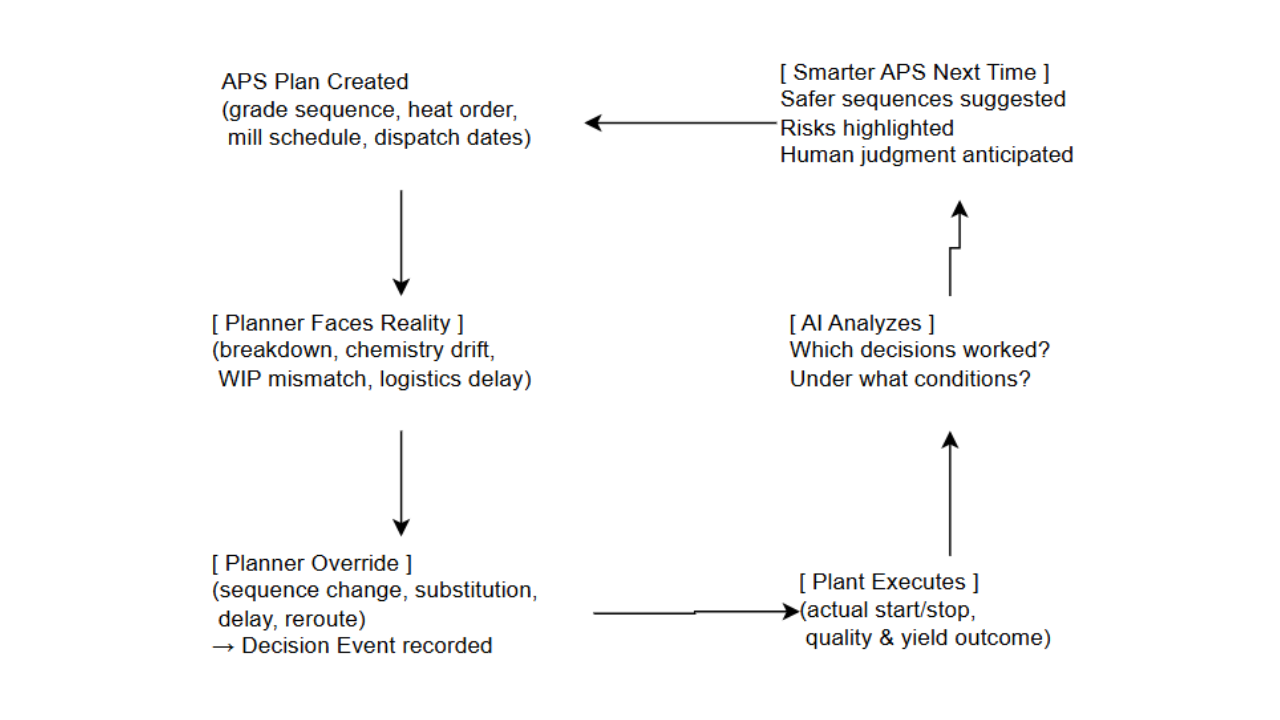
The organization compares recommendation, decision, action, and outcome. It records why a planner overrode the recommendation and whether that override improved the result.
This is the complete loop:
Signal → Context → Options → Recommendation → Authorization → Action → Outcome → Learning
The purpose of AI is not to decorate this loop. It is to make the loop faster, clearer, and more reliable.
And the loop must remain understandable to the people who carry the operational consequences. An elegant model that nobody trusts is not a decision capability. A simple rule that is visible, measurable, and consistently useful may be the better first step.
The test is not whether the system looks intelligent in a demonstration. The test is whether a person working a difficult shift can use it without having to reconstruct the entire situation from six screens, two calls, and a spreadsheet they keep on their desktop.
Context beats isolated prediction
Prediction remains valuable. A model that identifies a likely defect, delay, or demand change can create an important early signal. But a prediction alone does not tell an operator what to do.
Imagine a model predicts that a shipment will miss its delivery window. The operational response depends on several questions:
- Is the customer promise contractual or flexible?
- Is an alternative production lot available?
- Can another carrier move the material?
- Will expediting this order displace a more important order?
- Is the product eligible for substitution?
- Does the action create a quality, safety, or margin risk?
The best prediction can still produce a poor decision if it is disconnected from constraints and authority.
This is where many AI programmes frustrate the business. A model may have impressive validation metrics, but the planner cannot use it because it does not know the current sequence, commercial commitment, or quality rule. The model is not necessarily bad; it has been asked to solve a larger decision than its design supports.
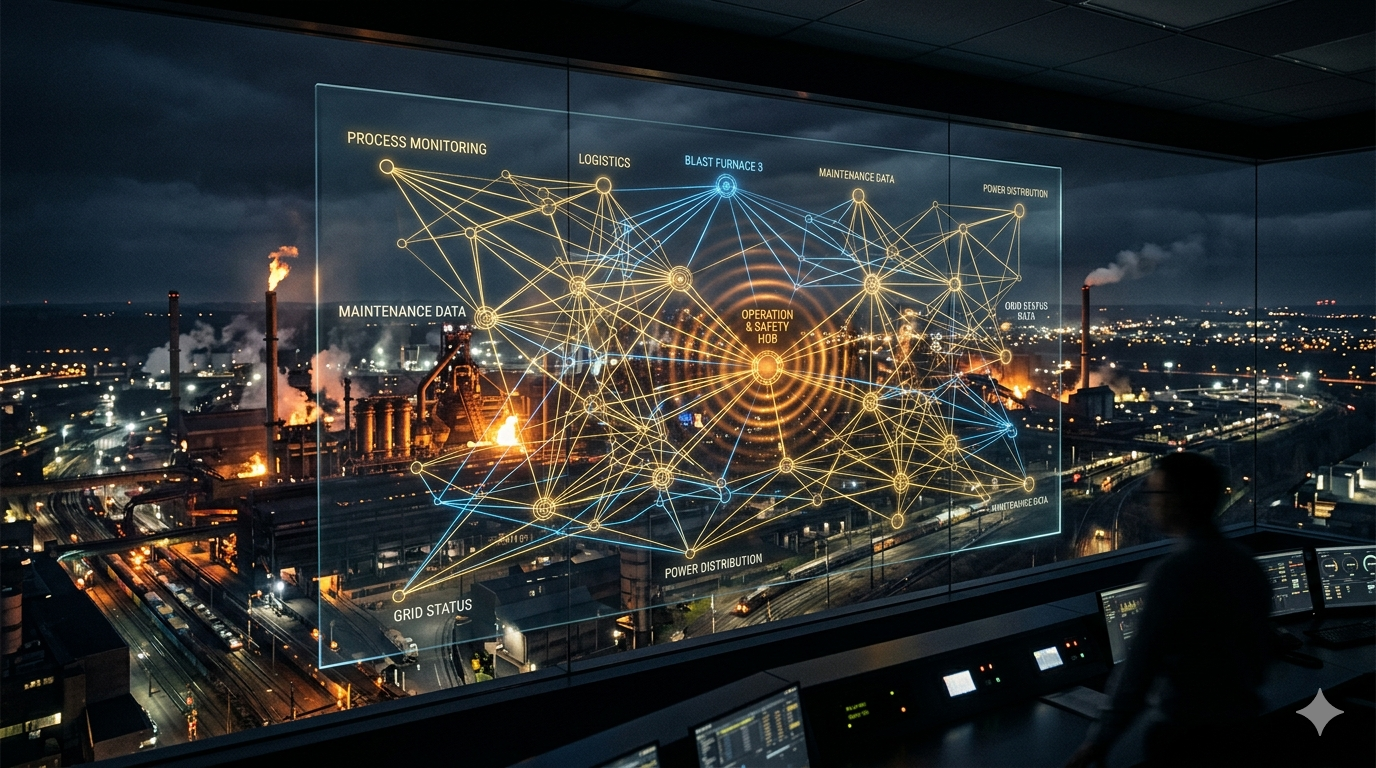
This is why the architecture of decision intelligence must join ERP, MES, APS, quality, logistics, customer, and project information at the moment of choice. It does not require every system to become one system. It requires the decision layer to understand the relevant relationships.
Planner overrides are not noise
In many organizations, an override is treated as a failure of the model. Sometimes it is. Often it is evidence that the system is missing context.

A planner may reject a recommendation because they know a customer is about to change an order, a furnace is unstable, a carrier is unreliable, or a quality concern has not yet reached the formal data stream. That knowledge may be informal, but it is operationally real.
People also override systems because they are accountable for the consequences. If a recommendation produces a late delivery or quality complaint, the person receiving the escalation will be asked why they accepted it. Recommendations therefore need reasons, not just rankings: constraints considered, assumptions made, and consequences of alternatives.
The right question is not simply, “Did the planner follow the model?” It is:
“What did the planner know, and how can the decision system learn to represent it?”
An override should therefore capture a reason category, confidence, and eventual outcome. Over time, the organization can distinguish between:
- a genuinely superior human judgment;
- a missing constraint or data relationship;
- an overly cautious policy;
- a weak recommendation;
- a change in operating conditions;
- or an unsafe attempt to bypass governance.
This turns human expertise into a feedback asset without pretending that every human choice is automatically correct.
The objective is not to make the planner feel observed by a machine. It is to make the system more honest about what it knows and does not know. A good override process asks, “What did the recommendation miss?”
That small change in language can change the quality of adoption. It treats the planner as a source of operational evidence rather than as a compliance obstacle. It also acknowledges something important: the person closest to the decision may be seeing a condition that the enterprise has not yet learned to encode.
From predictive to prescriptive to agentic
Manufacturing AI is often discussed as if it were a single capability. It is more useful to distinguish three levels.
Predictive AI estimates what may happen: a defect, delay, failure, or demand change.
Prescriptive AI compares possible actions against objectives and constraints: change sequence, allocate inventory, adjust a plan, or escalate a risk.
Agentic AI carries a decision through a bounded operating loop. It gathers context, calls tools, prepares or executes an action within its authority, records the result, and escalates when the situation exceeds its boundary.
Not every decision needs the third level. In fact, many decisions should remain at recommendation or approval because they are high-consequence, difficult to reverse, or poorly understood.
The maturity question is not “How autonomous can we become?” It is “What level of assistance is appropriate for this decision?”
That question is especially important in manufacturing because decisions differ sharply in consequence. Reordering a routine consumable and changing a safety-critical process parameter are not neighbouring use cases simply because both can be represented in software. The authority, evidence, testing, and rollback requirements must reflect the real-world impact.
The minimum viable decision product
The first decision product does not need to solve the whole supply chain.
Choose one recurring decision with:
- a named owner;
- a measurable service-level expectation;
- a manageable set of alternatives;
- known constraints;
- a clear action path;
- an outcome that can be observed;
- and a safe way to keep a human in control.
For example, a steel manufacturer could begin with order balancing when a production disruption affects several customer promises. The initial product might not change plans automatically. It could assemble the affected orders, identify feasible substitutions, rank recovery options, show margin and delivery consequences, and record the planner’s decision.
That is already more valuable than another dashboard because it helps the organization make a decision at the moment it matters.
It creates a healthier relationship between the plant and technology team. The plant need not promise to trust AI everywhere, and technology need not promise that one model will transform the enterprise. Both sides can improve one decision, observe what happens, and earn the next level of authority through evidence.
The first version should feel almost modest. It might save a planner ten minutes, reduce one avoidable escalation, or make one difficult customer conversation more informed. Those gains can look small beside the language of transformation. They are not small to the people who had to make the decision, and they provide the evidence needed for a more ambitious capability later.
A practical 90-day sequence
Days 1–30: Discover the decision
Interview planners, operators, quality teams, logistics, sales, and finance. Map one decision from signal to outcome. Record handoffs, delays, workarounds, hidden constraints, and authority boundaries.
Do not begin by cleaning every data source. Begin by understanding the decision that the data must support.
Spend time where the decision happens. Listen to the shift handover. Sit with the planner when the schedule changes. Ask what they check first, what they do not believe, whom they call, and what they wish the system would tell them five minutes earlier.
What This Looks Like Inside a Steel Plant (OTIF Examples)
The first 30 days should not feel like a technology assessment. They should feel like a guided investigation into how an order actually moves through the plant—and where its promise begins to weaken.
To make this practical, imagine an interviewer sitting separately with the management team, planner, scheduler, operator, shift incharge, quality team, internal logistics, customer service, and marketing. The interviewer uses one recent OTIF failure and asks each person the same question:
“Take me through what you knew, when you knew it, what choice you made, and what information you were missing.”
Planner: “The schedule showed the order was feasible. But the system did not know that the material was under quality review, the changeover would take longer, and a partial quantity would be useless to the customer. I overrode the recommendation because I had context the system could not see.”
Quality representative: “The material was physically produced, but it was not yet usable. The certificate was pending, and the customer would not accept shipment without it.”
Shift incharge: “The previous shift handed over an urgent order, but not the reasoning behind the urgency. We inherited the instruction without inheriting the context.”
Customer service representative: “We often know that the promise is at risk before we know what we can responsibly tell the customer.”
These conversations reveal that OTIF failure is rarely created at the dispatch gate. The final miss is usually the visible consequence of earlier decisions: a promise accepted without enough feasibility evidence, a quality hold not translated into customer impact, a schedule optimised for the line rather than the complete order, or a handover where the facts survived but the reasoning disappeared.
Practitioner’s Worksheet
Select one recent order that missed OTIF. Interview the people involved separately. Ask:
- What was promised?
- What did “in full” mean for this customer?
- What was the first warning signal?
- Who noticed it?
- When did the signal become an order-level risk?
- What options were still available?
- Which constraint changed the decision?
- What information was missing?
- Who had authority to act?
- What should have been visible 24 or 72 hours earlier?
A structured interview worksheet can be used to record the decision, evidence, constraints, options, overrides, and outcome. The objective is not to identify who caused the miss. It is to understand where the organisation lost time, context, and choice.
The value of these interviews is not that they produce perfect answers. Their value is that they make invisible work visible. They show how much of OTIF performance depends on people carrying context across boundaries, often without a shared record of what changed or why.
That is the practical beginning of decision intelligence: not replacing judgement, but helping the organisation see, share, and improve the judgement it is already using.
Days 31–60: Build the decision evidence loop
Connect the minimum required events and context. Create a decision ledger. Design three or four feasible options. Test historical scenarios and allow users to challenge the recommendation.
Measure time to understand, time to decide, option quality, and override reasons.
Ask whether users can explain the recommendation to one another. If they cannot, the product is not ready for a high-pressure operating rhythm, regardless of how attractive its interface looks.
Days 61–90: Run in shadow mode
Let the system prepare recommendations without executing them. Compare its recommendations with actual decisions and outcomes. Identify where context is missing, where policies conflict, and where users do not trust the explanation.
Only then decide whether the product should assist, prepare, or execute within a bounded authority.
Shadow mode is where the organization discovers whether the decision has been defined correctly. The system should be allowed to say, “There is not enough evidence to recommend an action.” That restraint is often more valuable than a confident but fragile answer.
Questions for the executive team
- Which recurring decision currently consumes the most coordination time?
- Where does a signal become an action—and where does it wait?
- Which decisions have a clear owner but poor evidence?
- What do planner overrides teach us about the operating system?
- Which decisions are reversible enough for bounded automation?
- What outcome will prove that the decision product is useful?
- Are we funding a persistent capability or merely another pilot?
Conclusion: build for the moment of choice
The supply chain of the future will not be defined by how many dashboards it displays or how many models it deploys. It will be defined by how reliably it converts changing conditions into timely, accountable action.
That requires a different design centre.
It requires us to look at the enterprise as people experience it: not as a collection of systems, but as a sequence of moments when someone must choose under pressure. The quality of those moments determines whether a plan survives contact with reality.
Start with the decision. Give it context. Make options visible. Preserve human authority where consequence demands it. Capture the outcome. Learn from the override. Then improve the loop.
The supply chain does not need another screen.
It needs a better way to decide.
And the best place to begin is usually not the most futuristic decision. It is the one the organization makes repeatedly, where people already feel the cost of delay, and where a better loop can make their working day a little less dependent on memory, escalation, and heroics.
The supply chain is not only a network for moving material. It is a network for preserving and spending choices. AI earns its place when it helps the people inside that network see those choices earlier, understand them honestly, and act while the good ones are still available.
Disclaimer
The steel plant scenario in this article is a composite illustration intended to explain a general operating pattern. It is not a claim about any particular company, plant, vendor, or production incident. Specific implementations should be validated against local safety, quality, cybersecurity, contractual, regulatory, and labour requirements.
#DecisionIntelligence #ManufacturingAI #SupplyChainAI #SmartManufacturing #IndustrialAI #DigitalTransformation #OperationalExcellence #AIinManufacturing #DecisionCentric #ManufacturingLeadership