From Monolithic Systems to Agentic Intelligence
The steel industry has long been the backbone of modern civilization, built on the reliability of massive, monolithic systems—ERP for finance, MES for production, and LIMS for quality. However, the rigidity of these systems often creates data silos where critical insights go to die. My conviction is that the future of the Smart Mill does not lie in the rip and replace of these foundational layers, but in the deployment of Agentic AI Microservices.
Unlike traditional software that follows linear logic, Agentic AI acts as a digital colleague—an autonomous entity that can perceive a problem (like a contaminated scrap load), reason through the implications for the melt shop, and negotiate a resolution (price deduction) across different software platforms. By building a suite of intelligent agents that sit on top of existing ERPs and MES, we transform static records into dynamic decision-support engines. This is the leap from digitized records to autonomous intelligence.
The Rise of Agentic Microservices in Steel Manufacturing
The transition from traditional automation to Agentic AI marks a paradigm shift in metallurgical operations. While Generative AI (like Gemini or GPT-4) can summarize a heat report, Agentic AI can act on it. In a steel environment, an Agent is a specialized software module capable of goal-oriented behavior, tool use (accessing APIs), and iterative reasoning.
The Architecture of Augmentation
Instead of a single, bloated AI system, the future belongs to Multi-Agent Systems (MAS).
Let us take the example of a hypothetical Scrap Negotiator, and understand how Agentic AI can help.
- The Sensory Agent: Scans scrap using multimodal LLMs. Multimodal means not just limited to text i/o, but also audio, video, image, etc
- The Procurement Agent: Monitors LME/CRU market prices and historical supplier performance.
- The Metallurgical Agent: Calculates the impact of the current scrap grade on the specific energy consumption (kWh/t) and alloy requirements of the EAF (Electric Arc Furnace).
- The Orchestrator: A “Manager” agent that synthesizes inputs from the above three to execute a final decision—such as “Accept Load with 12% Discount” or “Redirect to Low-Grade Yard.”
This microservice approach allows steelmakers to remain “Agile.” You don’t need to change your 20-year-old ERP logic; you simply feed its data into an Agent that provides the “Next Best Action” for the operator.
Do real-world examples exist?
In short, of course! I can confidently say, this is not theoretical anymore! I went through some research sites and found answers to this question. Here you go:
1. Autonomous Slag Foaming Optimization in EAF Steelmaking
Machine-learning models for slag foaming control in EAF steelmaking have been demonstrated in real steel processes.
A published industrial research paper describes using machine learning (LSTM networks) to estimate slag foaming height from process variables (carbon, oxygen, electricity) and optimize control to improve energy efficiency and cost-effectiveness. Read here
This demonstrates AI-driven slag foaming estimation and control, which is the core capability behind autonomous adjustment of carbon/oxygen injection to optimize slag height.
2. Predictive Refractory Maintenance for Ladles
Citation: Research articles describe AI-driven predictive models estimating ladle ageing and refractory lining condition in steelworks using real ladle operation data. Read here
This is directly relevant to predictive refractory maintenance — predicting wear and planning service actions based on AI models.
3. Dynamic Energy Load Balancing with AI / Smart Production & Electricity Pricing
Though not a steel-specific published case that openly shows an AI agent automatically rescheduling furnace runtime based on electricity pricing, there are real published systems for energy-aware optimization:
Citation: Research on AI-enabled dynamic demand response shows systems that forecast grid prices and shift manufacturing loads to low-price periods using reinforcement learning and optimization. Read here
This same class of smart industrial energy management is exactly what an agentic load balancing agent would leverage.
4. Automated Quality “Non-Conformance” Negotiator (Surface Inspection + Automated Decisions)
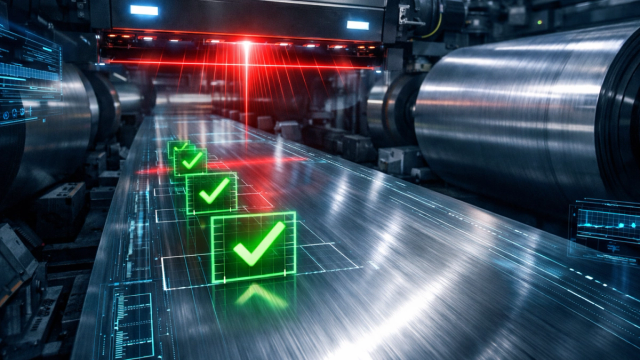
Citation: Automated surface inspection with machine vision in steel production is an established real application, detecting defects in billets and other products in real time. Read here
While most publications focus on inspection itself, many commercial suppliers (outside open academic papers) already integrate such systems into quality management and rerouting logic, especially when integrated with ERP/MES workflows.
5. Agentic Supply Chain Digital Twin (What-If & Alternative Supplier Models)
Although direct academic papers on “agentic digital twin suppliers + metallurgical impact + plan” in steel aren’t freely published, there are open case studies on AI in supply-chain planning with optimization and digital twin capabilities:
Citation: AI for supply chain optimization (including alternative sourcing decisions via RPA and data analytics) is widely documented in freely accessible industry articles. Read here
Many enterprise digital twin/SCM systems embed these optimizations and are actively used in heavy industries like steel.
Want more?!
Copy-paste this prompt on any popular AI engine like ChatGPT, Gemini, or Claude, and help yourselves:
The future of the steel industry won't be defined by those who buy the biggest servers, but by those who build the brightest agents. We are moving beyond the era of "Big Data" and entering the era of Big Agency – where every furnace, every crane, and every scrap gate is empowered by an intelligent microservice that doesn't just record history, but actively shapes a more profitable, sustainable future.
The forge is ready; the intelligence is yours to build.
Disclaimer: The views expressed in this article are personal in nature, for informational purposes only, and do not constitute professional, operational, or financial advice for specific manufacturing facilities.