They say, “New ideas cannot originate if you are scared of making mistakes.”
It sounds like something your school teacher wrote on the board before a surprise test. But right now, it might be the most relevant line for anyone watching what’s happening with AI and the future of software.
Because here’s the uncomfortable truth: the next wave of software isn’t being built by people who have everything figured out. It’s being built by people who are okay looking a little silly while figuring things out.
And if we sit on the sidelines waiting to feel “ready,” we’re not being careful. We’re just being left behind.
The Era of “I’ll Learn It Later” Is Over
There used to be a comfortable rhythm to technology.
A new programming language would show up. People would argue about it for five years. Some YouTube tutorials would appear. Then, maybe, you’d consider learning it.
Now? AI tools launch on Monday, become outdated by Friday, and get replaced by something better on Sunday evening while you’re still deciding whether to bookmark the documentation.

AI is not slowing down for anyone. Not for developers, not for marketers, not for product managers, not even for that one friend who still uses Internet Explorer “because it works”.
AI Is Not Just a Tool. It’s a Teammate That Doesn’t Sleep
Let’s be clear. AI is no longer just autocomplete for code.
It writes code, reviews it, suggests architecture, drafts legal documents, designs UI mockups, creates marketing copy, analyzes customer feedback, and probably has opinions about your product roadmap too.
Imagine having a team member who:
- Never sleeps
- Doesn’t complain about deadlines
- Doesn’t ask for chai breaks
- And still occasionally makes weird mistakes

Yes, AI is powerful. But it’s not perfect. And that’s exactly why you still matter.
The real skill now is not “knowing everything.” It’s being willing to try, fail, adjust, and try again faster than everyone else.
Fear of Mistakes Is the Real Bottleneck
Let’s talk about the biggest blocker. It’s not a lack of access. It’s not a lack of intelligence.
It’s fear.
- “What if I pick the wrong framework?”
- “What if this AI tool becomes irrelevant?”
- “What if I look stupid asking basic questions?”
- “What if my idea fails?”
Here’s a simple answer: you will pick the wrong things. Many times.
Everyone does.
Even the teams building the tools you’re afraid to try are experimenting constantly. Half their ideas don’t work. The ones on the other half barely work. And one idea changes everything.
That’s the game.
Every Domain Is Being Rewritten (Yes, Even the Boring Ones)

Let’s walk through real domains:
- Product Development: AI can now generate not just prototypes, but also production-ready products, faster than your team can agree on a meeting time.
- Marketing: Ad copy, email campaigns, social posts. AI can create 50 versions while you’re still thinking of a headline.
- Sales: AI can analyze customer conversations and tell you what you should have said five minutes ago.
- Legal & Compliance: Contracts, audits, regulatory summaries. AI can help decode those 50-page PDFs that nobody reads fully.
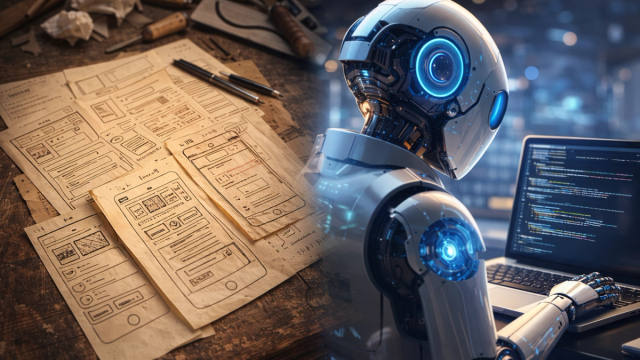
- Design from wireframes to full UI concepts. Your “blank page anxiety” is officially outdated.
- Government & Policy: Even regulations are slowly adapting to AI. The irony is beautiful. The slowest systems are being forced to move faster.
- So if you’re thinking, “I’ll just stay in my lane,” bad news. Your lane is being rebuilt.
A Real-Life Example (You’ll Recognize This Person)
Let’s say there’s a guy named Ramesh.
Ramesh has been working in software for 12 years. Solid guy. Knows his stuff. Writes clean code. Drinks filter coffee like it’s a performance enhancer.
He hears about AI tools.
His reaction: “I’ll wait. Let it mature.”
Meanwhile, his colleague Priya decides, “I don’t understand half of this, but let me try.”
Priya:
- Uses AI to write boilerplate code
- Experiments with new frameworks
- Breaks things daily
- Fixes them (mostly)
- Occasionally ships something impressive
Six months later:
Ramesh is still “evaluating”. Priya is leading a new product initiative.
Did Priya make mistakes? Constantly.
Did she look confused sometimes? Absolutely.
Did it matter? Not even slightly.
Mistakes Are Not Bugs. They’re Features
We need to reframe mistakes.
In the AI-driven world, mistakes are not something to avoid. They are something to optimize for.
Think of it like this:
- Every wrong prompt teaches you how to ask better questions
- Every failed prototype teaches you what not to build
- Every awkward demo teaches you how to communicate better
It’s like learning to ride a bike. Except now the bike is on fire, moving at 100 km/h, and giving you suggestions on how to pedal better.
The Procrastination Trap (Also Known as “Research Mode”)
There’s a very dangerous phase called “I’m researching.”
It looks productive. It feels responsible.
But often, it’s just the fear of wearing formal clothes.
- Watching 20 videos about AI tools
- Reading 15 blogs about “top frameworks.”
- Comparing options endlessly
Meanwhile, someone else:
- Picked one tool
- Built something messy
- Learned 10x faster
Progress beats perfection. Every time.
Communication Is Now a Superpower
Here’s something surprising.
In the AI era, your ability to communicate clearly matters more than your ability to memorize things.
Why?
Because AI responds to how you ask.
If your instructions are vague, you get vague results. If your thinking is clear, your output improves dramatically.
So whether it’s:
- Writing prompts
- Explaining product ideas
- Pitching to stakeholders
Clarity is your competitive edge.
Even Regulations Won’t Wait Forever
Let’s talk about the scary part. Legal, compliance, government rules.
People often say: “I’ll wait until things are regulated.”
That’s like saying: “I’ll start learning to swim after the ocean becomes calm.”
Regulations will evolve. Slowly. Sometimes confusingly.
But innovation doesn’t pause for paperwork.
The people who understand both technology and constraints will win. Not the ones waiting for perfect clarity.
A Little Reality Check
If fear of mistakes actually worked, none of us would:
- Send our first email (remember those awkward ones?)
- Speak English confidently (hello, grammar errors)
- Post anything online (one typo and we panic)
- Scan the bar code to pay the street-side vendor online (we did not panic then!)
And yet, here we are.
You learned everything important in life by being slightly uncomfortable.
AI is no different.
So What Should You Actually Do?
Not a complicated plan.
Start small. Start messy.
- Try one AI tool
- Build one tiny project
- Ask one “stupid” question
- Break something
- Fix it
Repeat.
You don’t need permission. You don’t need mastery.
You just need momentum.
Final Thought
“New ideas cannot originate if you are scared of making mistakes.”
Right now, AI is opening doors faster than we can process.
Some people are hesitating at the entrance, worried about stepping wrong.
Others are walking in, tripping occasionally, laughing about it, and discovering entirely new rooms.

Step in without fear! Don't wait!
The difference is not intelligence. It’s attitude.
So go ahead. Make the mistake. Ship the imperfect thing. Ask the basic question.
Because in this new world, the biggest risk is not failure.
It’s standing still while everything else moves.