

Articles
1–10 of 28 articles shown
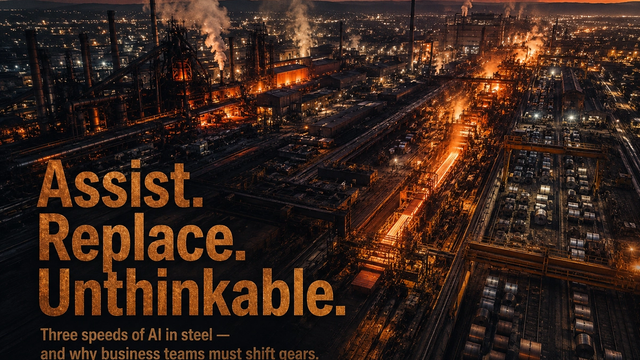 The Steel Industry's AI Moment Has Three Speeds — And Business Teams Are Stuck in First Gear15 min readAI in steel is ready. The bottleneck is business teams. Explore a three-tier taxonomy: Assist, Replace, Unthinkable, across every function of an integrated steel plant.
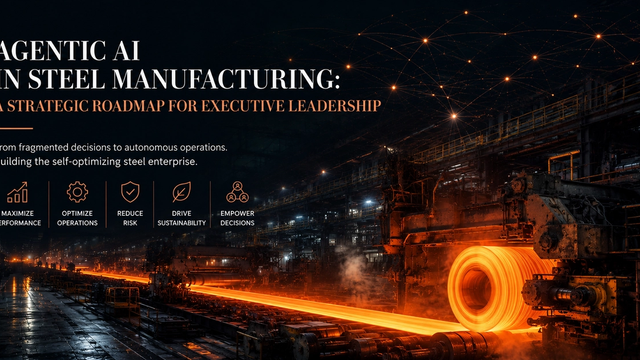 Agentic AI in Steel: Why Your Plant Already Has the Data, But Not the Decisions5 min readYour plant doesn't have a data problem. It has a 40-minute problem: the gap between something changing on the floor and someone actually acting on it.
Here's what agentic AI really closes in steel manufacturing, and the five questions worth asking before your next AI budget cycle.
Agentic AI in Steel: Why Your Plant Already Has the Data, But Not the Decisions5 min readYour plant doesn't have a data problem. It has a 40-minute problem: the gap between something changing on the floor and someone actually acting on it.
Here's what agentic AI really closes in steel manufacturing, and the five questions worth asking before your next AI budget cycle.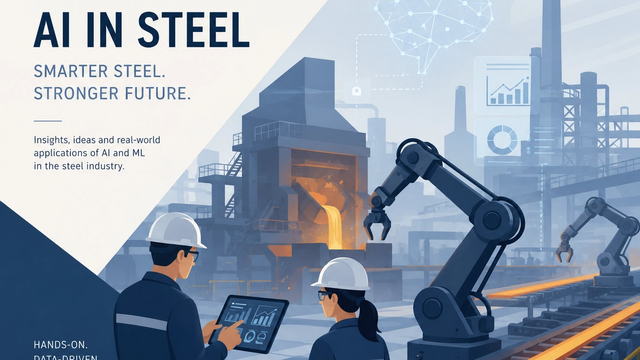 Unlocking AI's Potential in the Steel Industry10 min readDiscover how hands-on experience and data-driven strategies in steel production can unlock AI's potential for operational efficiency and innovation.
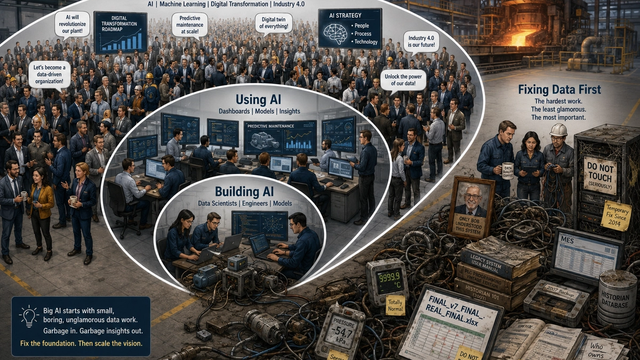 Nobody Gets a Bonus for Clean DataWhy "fix your data first" is bad advice for AI in steel. Forget AI-first vs data-first—start with the business problem and let the feedback loop do the rest.
 I built a clinical tool with AI. Now I'm seeing the steel mill in everything.15 min readBuilding Software in a Domain You Don't Know. A developer built a clinical tool with AI as thinking partner, not auto-complete. Here's what worked, what didn't, and how the pattern transfers to industrial software.
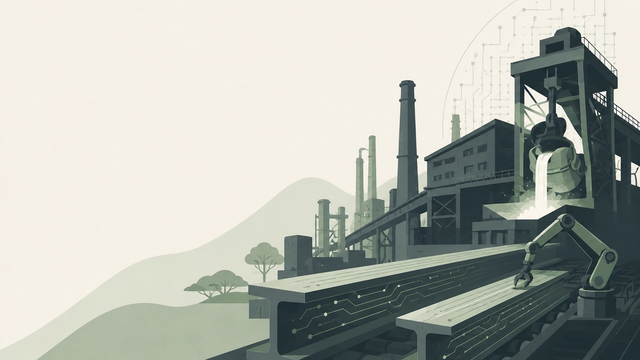 Accelerating Steel Innovation with AI: Strategies for SuccessAI is transforming the steel industry by improving efficiency, quality, and decision-making, but successful adoption requires more than technology alone. Strong executive sponsorship, effective change management, workforce upskilling, and continuous performance measurement are essential to turning AI initiatives into lasting business value.
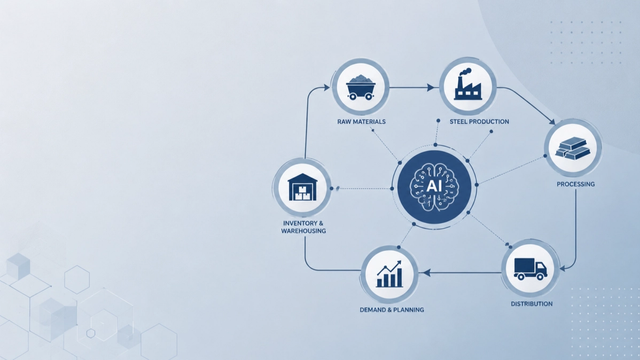 Integrating AI into Supply Chain Workflows in Steel ManufacturingAlso on LinkedInIntegrating AI can lead to significant improvements in legacy supply chain systems, making them more efficient and responsive to market demands.
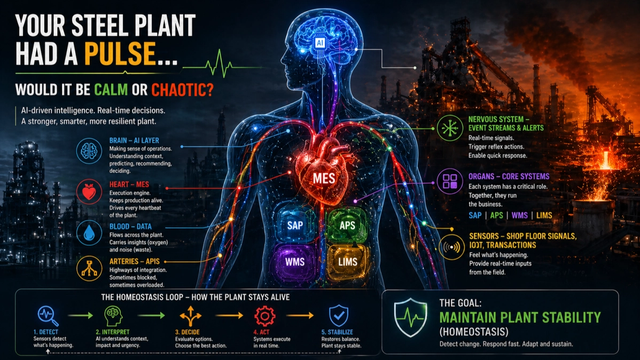 AI-Driven Enterprise Physiology ModelAlso on LinkedIn
 Move Fast, Break Things, Learn Faster: Why Fear Is the Only Bug You Can’t FixAlso on LinkedIn
 The Future Doesn’t Prototype, It Generates: From Idea to Production in 48 HoursAlso on LinkedIn
Showing articles 1 to 10 of 28 matching articles.