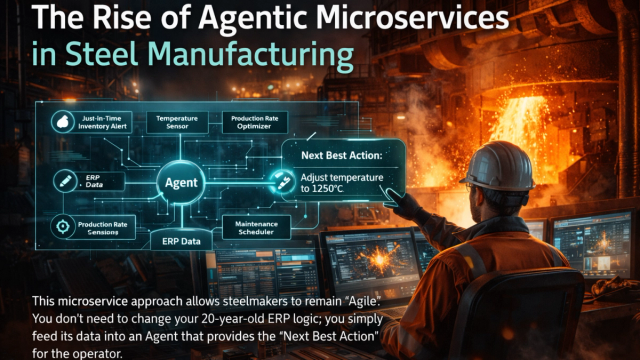
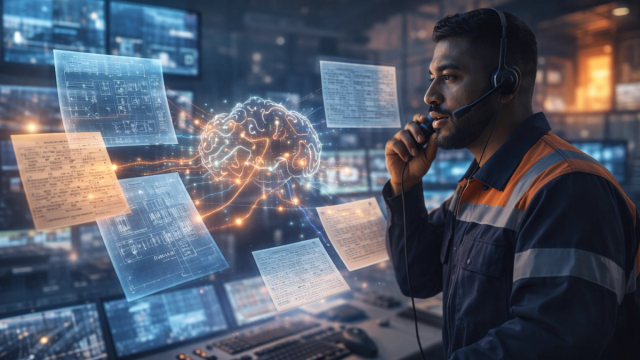
In the high-stakes theater of a hot rolling mill or a continuous casting line, a single surface crack – no wider than a human hair – can escalate into a multi-million-dollar liability. For decades, the steel industry relied on "post-mortem" quality checks. Today, we are witnessing a paradigm shift: moving from reactive inspection to proactive prevention by fusing the "eyes" of AI-driven Computer Vision with the "brain" of a Digital Twin.
The Synergy of Sight and Simulation

The transformation of surface quality management rests on two pillars:
High-Speed Computer Vision (CV): Utilizing deep learning architectures like Convolutional Neural Networks (CNNs), CV systems scan steel surfaces at speeds exceeding 20 m/s. These systems don't just "see" defects; they categorize them (slivers, scales, seams) with precision that far outstrips manual inspection.
The Digital Twin (DT): A virtual mirror of the physical asset. By feeding real-time CV data into the DT, we can simulate the thermal and mechanical stresses the steel underwent. If the CV detects a recurring defect, the Twin identifies the exact cooling nozzle or roller misalignment responsible.
The Autonomous Quality Loop
The integration of vision and simulation creates a closed-loop system where the "Predictive Surface" becomes a reality.

Industry Illustrations: AI in Action
ArcelorMittal’s AI-Driven Quality Fingerprinting: ArcelorMittal utilizes AI image recognition at its Canadian hot mills to decide on weld releases instantaneously and automatically. Furthermore, they use sensors to create a "digital fingerprint" of a coil, where quality defects are linked to a digital twin in the cloud, allowing customers to scan a barcode and access full quality data.
Tata Steel’s Neural Network for Slab Quality: Tata Steel implemented an "Advanced Alarming System" that uses Artificial Neural Networks (ANN) to predict longitudinal facial cracks in continuous casting before they occur. This allows operators to optimize process variables such as casting speed and heat flux to avoid defect formation.
POSCO’s Smart Factory Coating Control: At its "Lighthouse" factory, POSCO uses deep learning AI to control coating weight on its continuous galvanizing line (CGL). This system reduced coating deviation significantly, ensuring high-quality surface treatment while optimizing material usage.
Big River Steel’s "Learning Mill" Platform: Big River Steel utilizes an AI platform that analyzes data from approximately 50,000 sensors to recommend corrections that enhance product quality and maximize yield. Their AI-driven "Mechanical Properties Variability" application predicts when variability in steel grades will occur, allowing for tighter control of the overall production process.
The Vision Forward
For the steel leader, AI is no longer a "future project"; it is the current standard for survival. By digitizing the surface, we stop treating defects as an inevitable cost of business and start treating them as preventable data points. We aren't just making steel; we are making intelligent steel.
Disclaimer: The views expressed in this article are personal in nature, for informational purposes only, and do not constitute professional, operational, or financial advice for specific manufacturing facilities.